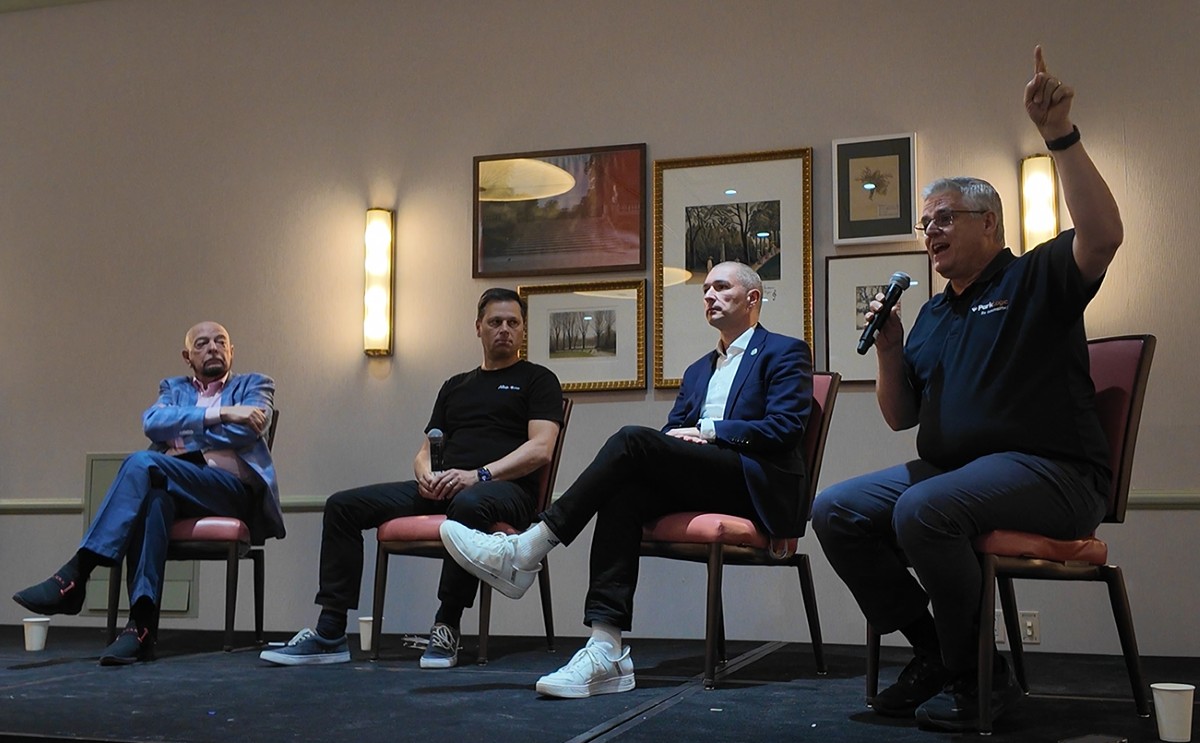
At the recent ICA Conference in Las Vegas, industry leaders gathered to discuss one of the most significant shifts domain monetization has experienced in years: the decline of AFD, the emergence of RSOC, and what sustainable monetization looks like moving forward. The panel brought together executives from across the ecosystem, parking platforms, monetization providers, and portfolio operators, for a candid discussion about what has changed and what comes next.
One of the central themes of the discussion was the structural fragility of AFD-driven revenue models. While many in the room felt the impact sharply in late 2025, with some portfolios reportedly experiencing revenue drops of up to 95%, the broader signals had been visible for some time. EPC adjustments, tightening compliance requirements, and ongoing pressure from traffic quality concerns had already begun reshaping the economics of parking.
As Michael Gilmour, CEO of ParkLogic, explained during the panel:
“It wasn’t sustainable. You could see the adjustments happening over time. The real question wasn’t whether change was coming, it was whether the industry was prepared for it.”
The conversation quickly shifted from loss to response: how companies adapted, or didn’t. RSOC was discussed as a necessary development, particularly for maintaining compliant monetization where traditional parking pages remain required. However, several panellists acknowledged that RSOC is not a universal solution. Gilmour was direct in his assessment:
“RSOC isn’t the solution. It may help in certain cases, but fundamentally it’s still the same traffic hitting the same pressures. If we don’t innovate, we’ll face the same cycle again.”
This sentiment echoed a broader industry understanding: replacing one feed with another does not fundamentally change the underlying risk of dependency. A recurring thread throughout the session was diversification, not just of feeds, but of monetization models altogether. Over the past two years, ParkLogic has focused heavily on building infrastructure independent of any single provider, integrating over 100 global advertising feeds and expanding into direct advertising relationships, data-driven monetization, and proprietary optimization systems. The emphasis, as described on stage, has been resilience.
“If a major feed adjusts, that shouldn’t determine the outcome for an entire portfolio. The goal is to create a structure that can absorb volatility.”
While other panellists highlighted similar efforts within their organizations, the consensus was clear: dependency risk is now one of the defining strategic considerations in monetization. Transparency was another topic raised during the panel, particularly around revenue share and platform practices. With revenue fluctuations and advertiser behavior often misunderstood, there remains skepticism in parts of the market about how monetization platforms manage performance adjustments. The broader takeaway from the discussion was that trust increasingly depends on visibility, clear reporting, defined revenue share structures, and consistent communication during volatility. In an environment where compliance scrutiny is rising and advertiser quality directly impacts portfolio value, transparency has shifted from being a differentiator to a necessity.
The conversation also addressed fraud detection, malware prevention, and traffic quality; issues that have grown more complex as automation and AI advance on both sides of the ecosystem. Panellists agreed that filtering, compliance, and advertiser vetting are no longer back-office functions; they are central to protecting domain value. As Gilmour noted:
“Short-term revenue isn’t worth long-term damage. If quality drops, everyone on the feed feels it.”
This aligns with a broader industry push toward stricter onboarding processes, deeper traffic validation, and closer collaboration between partners to reduce systemic risk.
Perhaps the strongest message from the panel was that innovation is no longer optional. The monetization environment is more dynamic than it was even five years ago. Feed policies change. Traffic quality standards evolve. Browser and regulatory oversight continues to increase.
In that context, the companies likely to lead are those investing in new monetization pathways rather than relying on historical performance. As summarized during the session:
“If revenue declines, the question isn’t who to blame, it’s whether we’re innovating fast enough.” The ICA panel did not offer a single solution to the post-AFD landscape, and that was the point. There is no single replacement model. No one feed that guarantees stability. The future of domain monetization will likely be defined by diversification, compliance, data-driven optimization, and ongoing innovation.
For operators and portfolio owners, the takeaway was clear: adaptability is now a competitive advantage. And as the discussion in Las Vegas made evident, the industry is actively reshaping itself in response.